
What Is Open Banking? How It Works, Benefits, and Challenges
Open banking shares banking data via APIs to drive better choices and innovation.

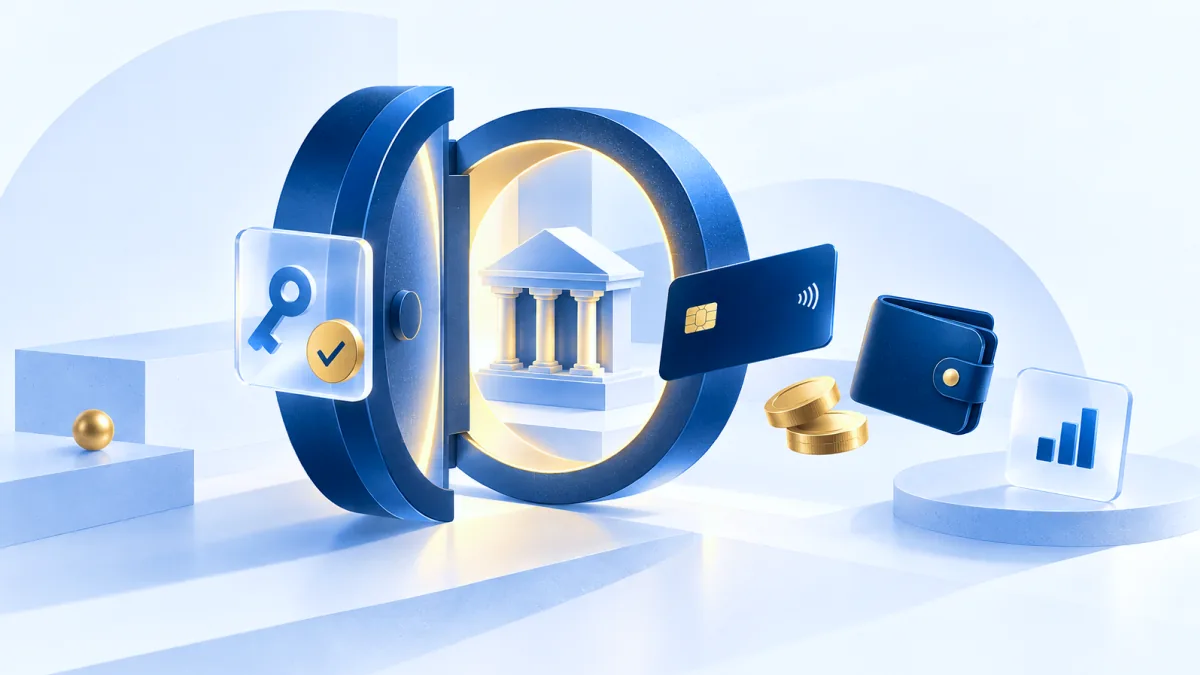
What is open banking?
Open banking lets outside firms use your bank data with your OK. They use secure APIs to do it. This supports more choice in banking and faster new ideas.
So, what is open banking in simple terms? It is data sharing with your consent. Your bank shares data with approved apps through open banking APIs. You control what they can access.
What is open banking data? It usually means balances and past payments. It can also include account details your bank holds. The app should ask for a clear set of data only.
- Consent: you pick what data is shared and why.
- Secure APIs: they move data safely between systems.
- Rules: partners must follow strict security steps.
What is open banking and why does it matter? It helps you compare tools easily. It also pushes banks and fintechs to improve services. That can mean better tools and fairer terms.
How does open banking work?
Open banking how does it work in real life? It follows one common consent flow. First, you choose an app you trust.
Next, you sign in with your bank to approve the request. Then the app asks for data using an open banking API. The bank releases data only for the approved scope.
What matters most is the link between consent and the API request. If you do not approve, nothing should flow. If you approve, access should expire when you set it.
It is consent first. Then API calls happen. Then data returns within limits.
- Pick a provider: choose the app or service you want.
- Approve access: confirm scope and time with your bank.
- API request: the app calls the bank API for data.
- Data delivery: the bank sends data back to the app.
Some services do more than reading data. Payment initiation can start an approved transfer. Account aggregation can show many bank accounts in one view.
For that reason, open banking referencing often includes “use cases” terms. Those use cases sit on top of the same consent and API steps. Different apps just request different data and actions.
Benefits of open banking
Open banking aims to raise competition and speed up new ideas. It also improves financial transparency across tools. That can make it easier to switch and test options.
One big gain is better financial control for customers. Apps can pull transactions and build spending views. Then they can show trends and alerts you can act on.
Another gain is a smoother customer experience. Fewer repeat forms can mean less time spent on onboarding. Users also get more relevant offers because data is current.
Businesses can gain efficiency too. They can automate data flow and reduce manual entry. That cuts work and helps with day to day cash tasks.
- Better money tools: budgets, cash views, and goal plans.
- Faster setup: less manual input in many flows.
- Lower ops work: less retyping and fewer checks.
- Fintech innovation: new apps build on shared access.
Also, open banking can help consumer empowerment. You can pick the app that fits your needs. You are not limited to one bank tool for everything.
Challenges of open banking
Open banking brings real risk and real work. Data privacy is a top concern. Even with consent, you may worry about how firms use data.
Security risks also matter. More API calls mean more systems to protect. Teams must use strong auth and tight access rules.
Compliance is another hurdle. Firms must follow a regulatory framework that sets expectations. That affects audit logs, incident plans, and how data can be used.
Reliability can be a practical pain too. If a bank API is slow, your app may lag. If formats differ, apps may map data wrong at first.
| Challenge | What you may see | What teams do |
|---|---|---|
| Privacy | Apps request too much data | Ask for narrow scope and clear use |
| Security | Tokens or links get misused | Use short access windows and audit checks |
| Rules | Flows break local consent rules | Build per region and keep proof of steps |
| API stability | Slow or partial data updates | Use retries and clear user status |
Still, these issues are solvable. Good firms design for safe access and clean errors. They also keep users informed during each step.
Examples of open banking applications
Open banking can power several common apps. The first is account aggregation. It lets you see many accounts in one place.
Another example is payment initiation. After you approve, a third party can start a transfer. This can cut steps at checkout or bill pay.
Apps can also offer more tailored money plans. For instance, they can spot repeat costs from data. Then they can suggest ways to save money.
Some tools help with sign up too. They can verify that you own an account using consented access. That may reduce paper work and speed up checks.
- Account aggregation: balances and past payments in one view.
- Payment initiation: a transfer begins from an app.
- Personal money tips: offers based on your spending flow.
- Faster sign up: checks tied to your account access.
What is open banking in Canada? It is less uniform than the EU model. You may see parts of open access and consent based data sharing. The key is to check what rules apply to that app.
Always look for clear consent and clear data use. If the consent scope is vague, be cautious. If the app explains the purpose, that builds trust.
Open banking regulations globally
Regulation is a big driver of open banking. In the EU, PSD2 played a key role. It pushed banks toward customer approved access for third parties.
That rule also helped set security and risk duties. It gave firms clearer paths for product build. That clarity helped adoption grow.
In other places, rules differ. Some regions rely on phased plans and licensing. Others use a broad set of standards for data sharing and access.
Still, the goal stays the same. Customers give consent for a defined use. Providers keep data safe and stay within the approved scope.
When people ask what is the open banking rule, they often mean this. Consent and safe API access come first. Then there are audit steps and risk controls that follow.
For a clear view of the EU approach, see Payment Services Directive PSD2 in EU law. It is the official text behind many PSD2 open banking rules.
[Note: Canada has its own paths and timelines. Always verify local rules for the app you use.]
FAQ: common questions about open banking
What is open banking and why does it matter?
Open banking lets approved apps access your bank data with your OK. It matters because it can improve choice and spur better service. It can also enable payment start and account view apps.
What is open banking data?
Open banking data is bank account data shared after consent. It often covers balances and past payments. The shared data should match what you approved.
What is an open banking API?
An open banking API is how an app requests data from a bank. It uses secure calls after you approve access. This keeps data sharing structured and safe.
What’s open banking in simple terms?
It is consent based sharing of your bank data with approved apps. Your bank sends data through APIs. You decide the scope for each link.
Is open banking available everywhere?
No. It varies by country and by regulator rules. Some places move fast with clear mandates.
How is open banking different from open data?
Open data is often public or anonymized information. Open banking is customer specific data shared with consent. The consent flow is what makes the difference.
Frequently asked questions
- What is open banking and why does it matter?
- Open banking lets customers share their bank data with trusted apps using secure APIs. It matters because it can improve choice and spur better service in financial services.
- What is open banking data?
- Open banking data often includes account balances and past payment details. Sharing is limited to what you authorize for a specific purpose.
- What is an open banking API?
- An open banking API is the secure interface that lets an app ask a bank for data after you approve it. It standardizes how authorized access works.
- What are the main challenges of open banking?
- The main challenges are privacy, security, and rule compliance. Reliability also matters for a good user experience.
- What services can open banking enable?
- Open banking can enable payment initiation, account aggregation, and more tailored financial tools. Many services rely on consented data access and secure approval flows.
- How did PSD2 influence open banking regulations?
- PSD2 in the EU helped set customer approved access rules for banks and partners. It clarified duties and helped adoption grow across the ecosystem.
Related reading

Best B2B Payment Platforms: Features, Types, and Selection Guide
Compare b2b payment platforms, methods, features, and best practices for smoother payments.
Open Banking User Experience: Benefits and Challenges
See how open banking changes customer experience via APIs, data control, and safety.
What Is Cybersource? Services, Security, and Visa Link
Understand what Cybersource is, how it works, and why it matters for secure payments.