
Open Banking Explained: APIs, Benefits, and Open Finance
Open banking explained: consent, APIs, benefits, and how it differs from open finance.

What is open banking?
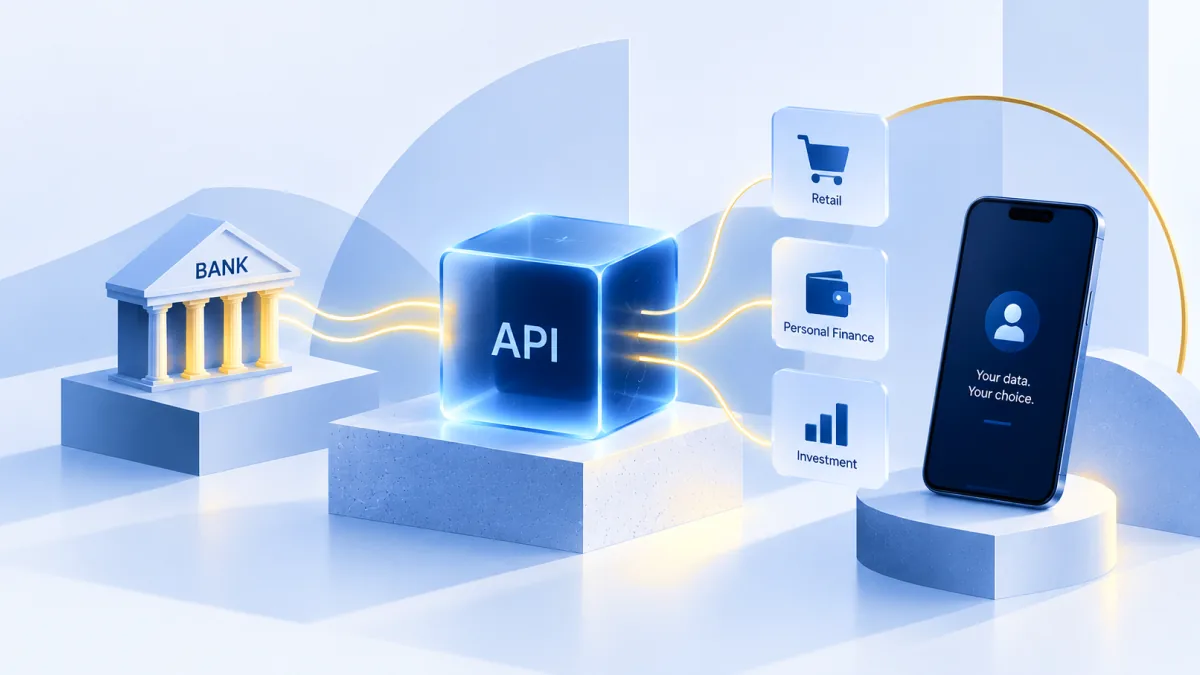
Open banking lets third parties get bank data with your clear yes. Banks share data in a safe way. They do it only after you agree.
This is “banking open” in practice. Data does not stay locked inside one bank app. APIs help apps ask for data in a set way.
It is not a blank check. You usually grant access to set data types only. Time limits also apply, so access ends.
Many people use open banking “banking open now” features without noticing. For example, you may link accounts in a budget app. The app then pulls your transactions to help you plan.
Key features of open banking
Open banking works on three core ideas. The first is user consent. You choose what is shared and for how long.
Next is data sharing, with clear limits. A bank sends only the data you asked for. It sends it in a set format, so apps can read it.
Third is API integration, meaning apps use a standard call. Apps do not need a special deal with each bank. They use a shared “open banking open api” path instead.
Security and rule checks sit under the whole flow. They help meet data privacy needs. They also support regulatory compliance duties in many regions.
- User consent: you approve a data type and a time window
- Data sharing: the bank shares only what you allowed
- API integrations: apps call set endpoints to get data
- Security controls: protections for sign-in and data transfer
Benefits of open banking
Open banking can boost user experience fast. It saves time and effort. It also cuts the need for manual exports.
You can get better personalization from real data. An app can spot how you spend. It can then show insights that fit you.
Open banking also supports financial aggregation. That means one place shows your data from many banks. You can then compare balances and track money moves.
These benefits can support consumer empowerment. You control access with clear consent steps. You can also stop access when you change your mind.
| Benefit | What it enables | Example |
|---|---|---|
| Better experience | Less manual work | Connect accounts to auto-sort transactions |
| Personalized services | Insights tied to your data | Cash-flow view before bills arrive |
| Financial aggregation | One view across banks | See cash from checking and savings |
| User control | Consent and access limits | Revoke access after a plan change |

Open banking vs. open finance
Here is the key idea for what is the difference between open banking and open finance. Open banking shares bank data. Open finance covers more kinds of finance data.
Open banking usually covers bank accounts and payments data. Open finance can add investments and insurance data. That widens the view of your full money life.
So open banking e open finance are linked. Open banking is the base model. Open finance builds on that base with more scope.
If you want one app to read your bank accounts, open banking fits. If you want holdings and policies too, open finance helps. The bigger the scope, the more work an app must manage.
- Open banking: bank accounts and payment data
- Open finance: can include investments and insurance data
- Same core: consent and safe data access via APIs
Open APIs in open banking
Open APIs are the tech bridge for data access. They let apps ask for data in a set way. That helps build an interoperable system.
An open banking open api flow often looks like this. First, a user signs in at the bank. Next, the user grants consent for a data scope.
Then the app sends a data request via the API. The bank replies with the allowed fields. The app can then update the user view.
Standard API patterns also support rule checks. They make it easier to enforce consent limits. They also help meet data privacy duties.
If you build for open banking, plan for real errors. Users may revoke access. Tokens can expire. The app needs clear fallbacks.
- Map consent to features: link each feature to exact data needs.
- Use set API calls: rely on docs and known endpoints.
- Handle consent end: refresh flows if access stops or fails.
- Check data fields: guard against missing or odd values.
- Keep access logs: store events for audits and checks.
Future trends in open banking
Open banking is still growing. More fintech innovation is coming each year. Many new apps will build on the same data access model.
Regulators will keep shaping the rules. Changes can affect consent steps. They can also affect security and data use.
Enhanced consumer data rights are likely to expand too. Users may get clearer control over access. That strengthens consumer empowerment and trust.
We can also expect more API consistency. As banks ship updates, apps may face fewer failures. Better tooling can speed up safe integrations.
In the long run, open banking may help power richer money tools. Think smart cash views and safer alerts. The goal is simple, useful outcomes for everyday banking.
| Trend | What changes | User impact |
|---|---|---|
| Stronger data rights | More control over access | Clear consent and easy stops |
| Fintech innovation | New services on shared data | More helpful insights and plans |
| Rule updates | New steps for consent and safety | More steady protections |
| Better API links | More steady integration paths | Faster setups and fewer breaks |
Frequently asked questions
- What is open banking in simple terms?
- Open banking lets third parties access some bank data after you give consent. It uses secure APIs to keep access controlled.
- How does open banking protect customer data privacy?
- It limits access to what you approve and for how long. It also uses security steps for sign-in and data transfer.
- What is the difference between open banking and open finance?
- Open banking is mainly bank account and payment data. Open finance can include investments and insurance data too.
- What is an open banking open api?
- It is the API layer that lets apps request data in a set way. This helps banks and apps work together with less custom effort.
- What can open banking be used for today?
- People use it for budgeting and money tracking apps. It also supports one place to view data across banks.
- What future changes are expected for open banking?
- Rules will keep evolving and consent will get clearer. Apps may also see more stable links via improved API work.
Related reading

Best B2B Payment Platforms: Features, Types, and Selection Guide
Compare b2b payment platforms, methods, features, and best practices for smoother payments.
Open Banking User Experience: Benefits and Challenges
See how open banking changes customer experience via APIs, data control, and safety.
What Is Open Banking? How It Works, Benefits, and Challenges
Open banking shares banking data via APIs to drive better choices and innovation.